A permanent identity, a signed service record, and a live condition score for every building system, so buildings run on foresight, not failures.
Every building, every system, scored and forecast in one place. This is the console your operators and contractors actually work in, not a slide about it.
A condition figure is only worth what sits underneath it. These are the three things a building actually gives you to work with, and a model that treats them the same way is wrong about all three.
Rooftop units, condensers, air handling. A technician attends, records amperage, pressures and temperature split, and those readings accumulate into a trend. This is the only asset class where condition is measured rather than estimated, and it is the layer nobody else has.
Two boilers where one carries the load is a completely different risk from one boiler, and almost no condition report accounts for it. The index is built to: the worst significant system caps the building, and a redundant pair is not the same exposure as a single point of failure.
Arrays, inverters, storage, and the electrical distribution behind them all carry HEIN identity. When a funder asks what a retrofit programme actually delivered, the answer comes from records of what was installed and what it has done since, not from a survey commissioned to find out.
A boiler is a boiler whether it sits under a rental block, a campus, an arena or a fifty year old housing complex. What changes is the consequence of it failing, who has to answer for it, and how thin the records were when you inherited them.
Central plant, in-suite equipment, common area systems, and a building envelope with a capital plan attached to it. One record per building, one identifier per system.
Dozens of buildings, decades of vintages, and a deferred maintenance figure that has to survive a board and an auditor. The registry is per building, the reporting is per portfolio.
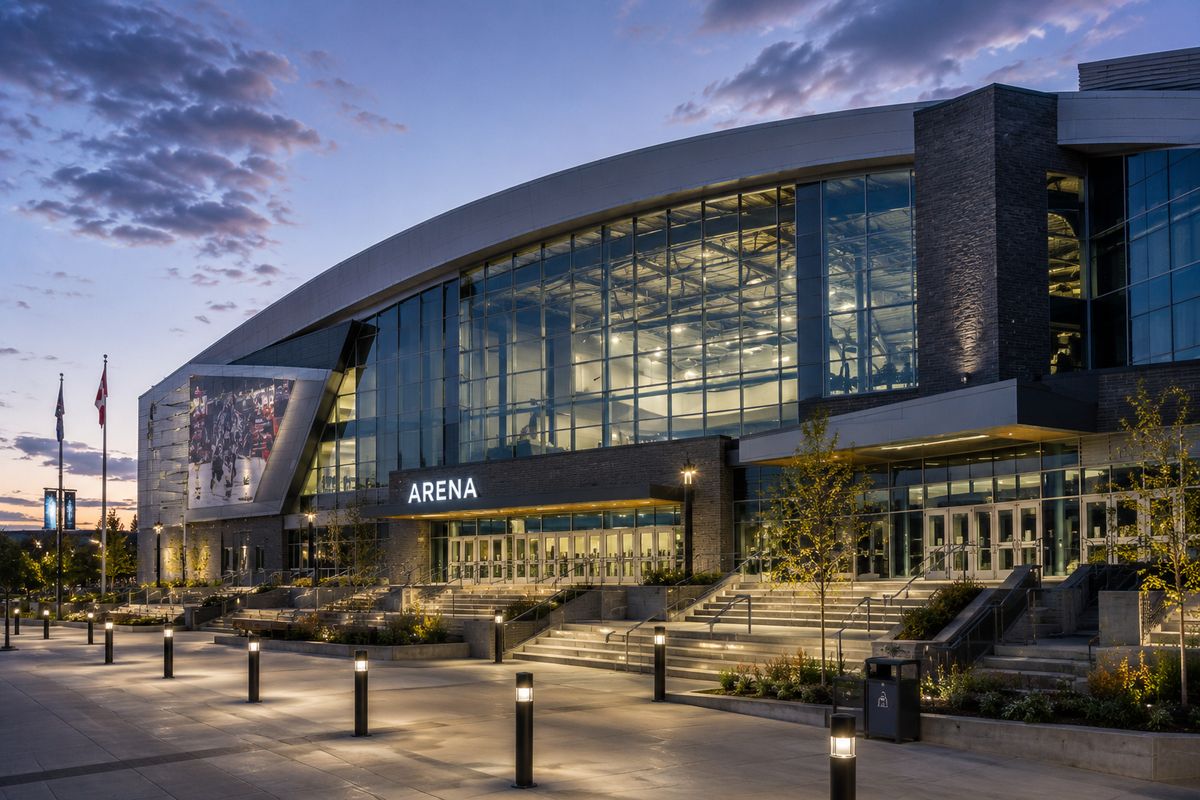
Ice plant, large-tonnage refrigeration, air handling for a full house, and a public safety obligation on every one of them. Downtime is not an inconvenience, it is a cancelled event.
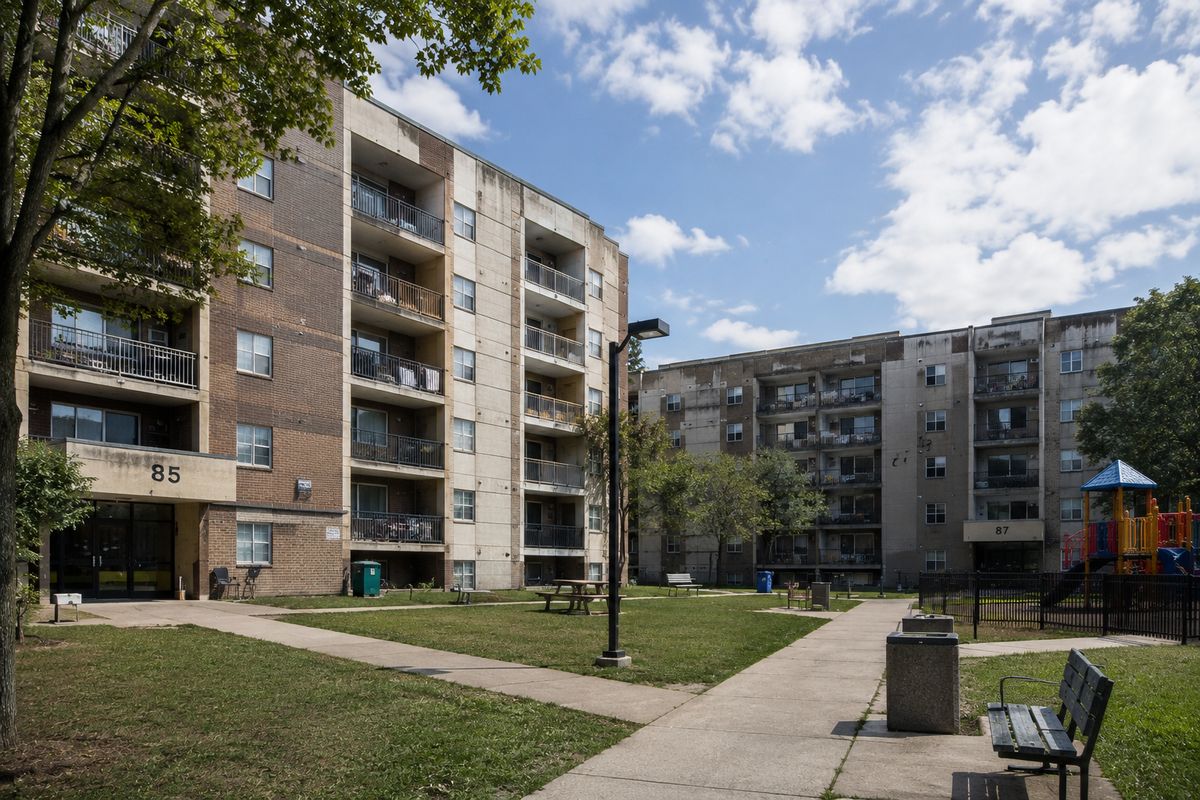
The hardest case and the one that matters most: original plant, thin records, and a funder asking what the money bought. This is where a documented condition figure changes what gets approved.
Harmelo is a product your team logs into, but getting a portfolio onto the registry and turning it into a plan you can act on is work we do with you, not something we sell and walk away from. Here is where the team shows up.
We help you identify every building system across your buildings and get them onto the registry, so you start from a complete picture instead of a blank page.
We turn your condition data into a multi-year capital plan you can take to a board or a lender, with the reasoning behind every number in it.
When a funder, insurer, or regulator asks for condition or disclosure reporting, we help you produce it from the records you already hold, with no fresh survey.
We get your service providers onto the registry so their work flows straight into the record, standardized at the point of work and signed by the person who did it.
Use our checklist templates for the most thorough service records, or build your own field records tailored to exactly how your team already works, so the registry fits your process instead of forcing a new one on you.
We walk your team or your board through Harmelo in person or on a call whenever it helps, so everyone reading the record understands what it is telling them.
Every building in every skyline runs on building systems that quietly age until the day they fail. Harmelo gives them a permanent record. The photos here were shot by our founder, Brad Pettes, in the cities we work in.
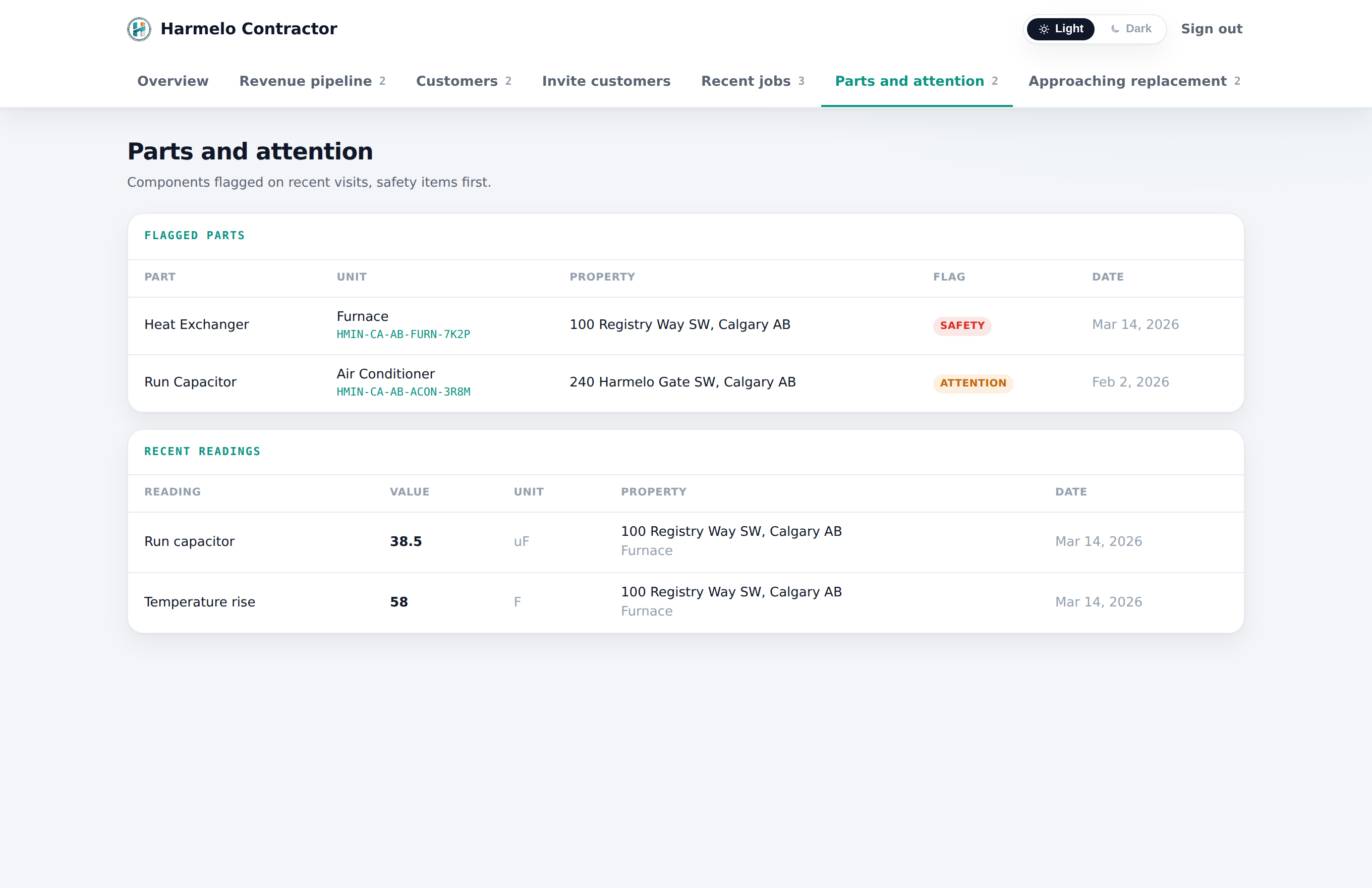
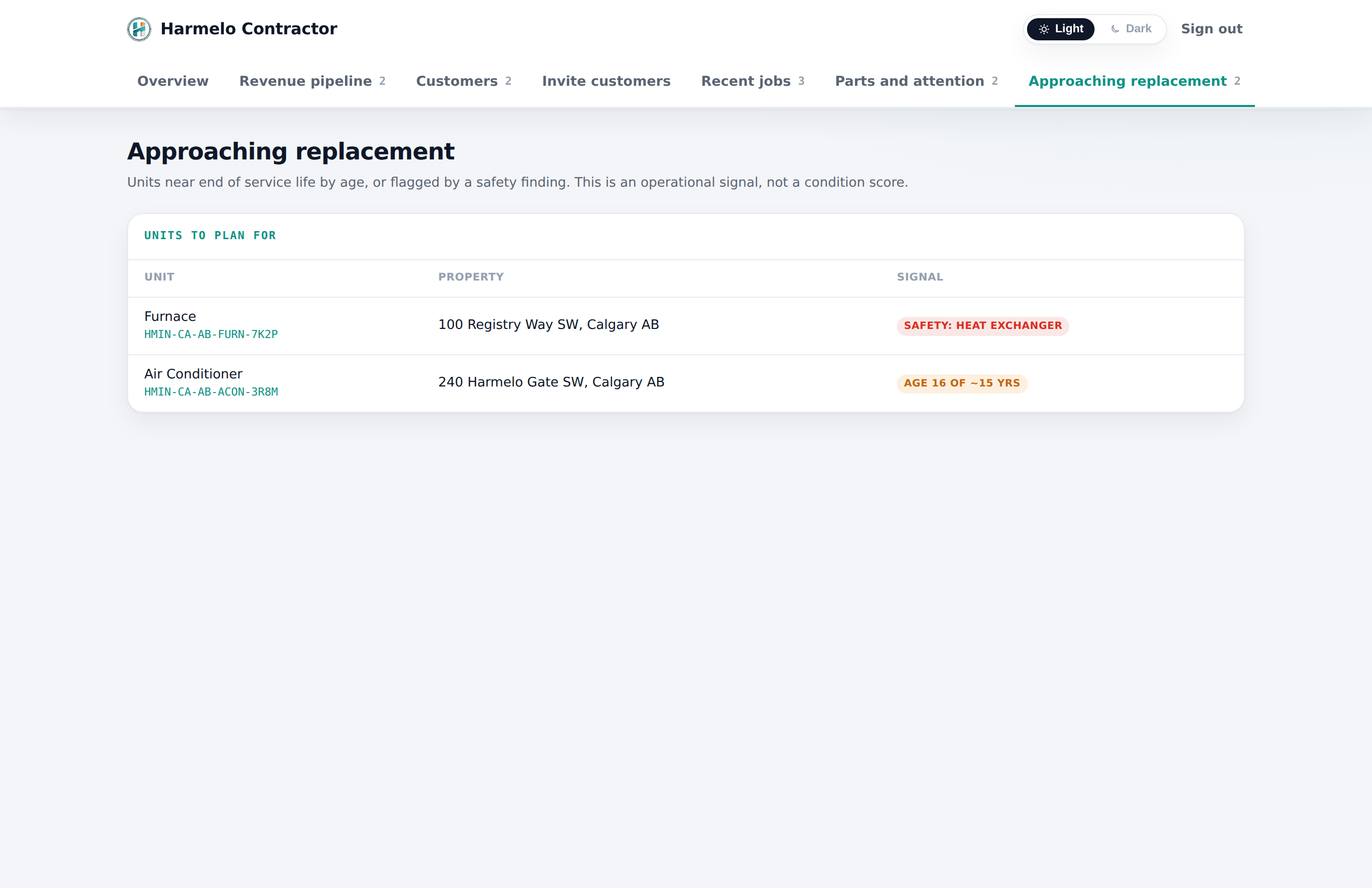
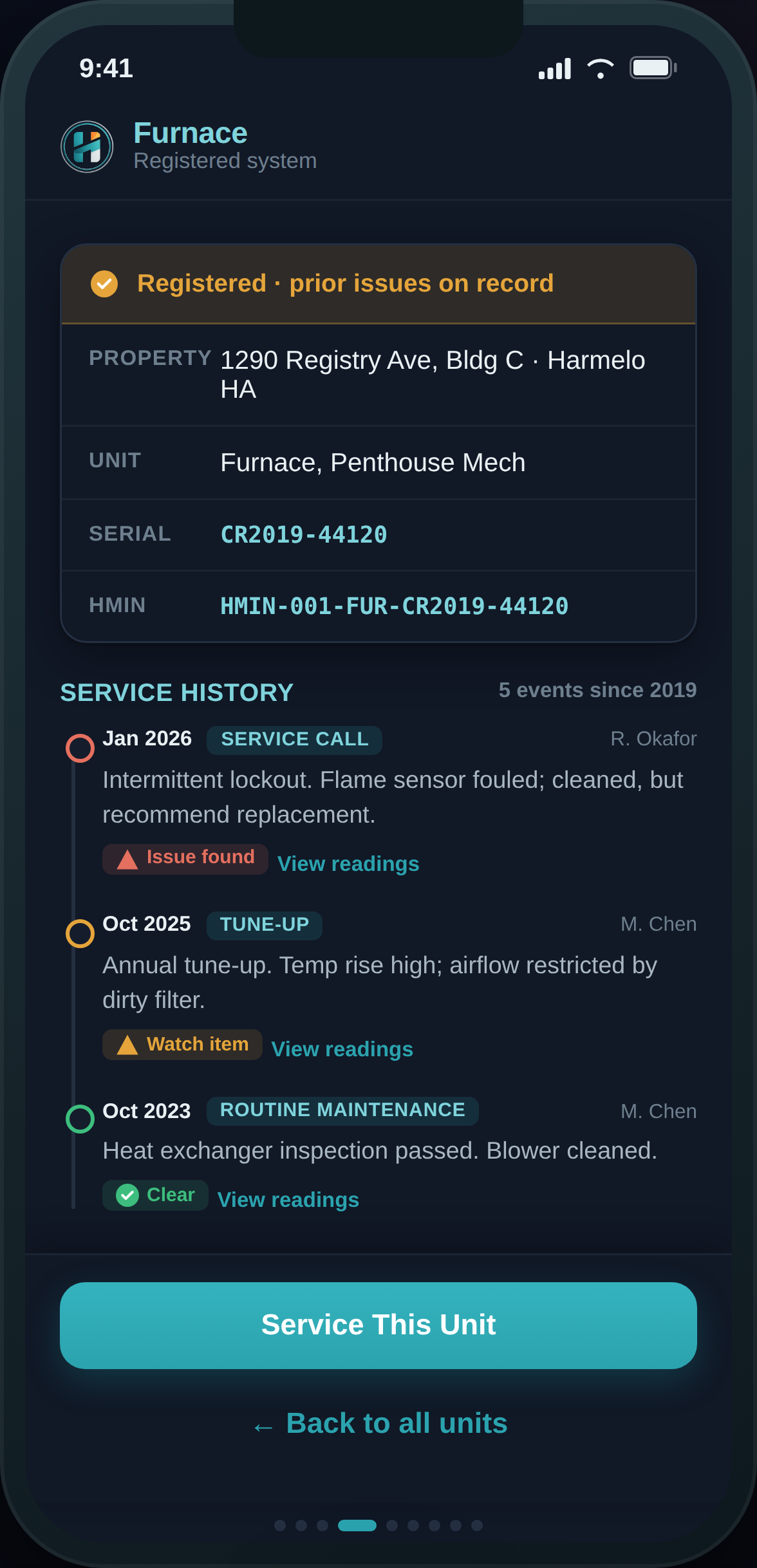
Dispatch a contractor to a system and, once you grant access, they see its full history before they arrive: what was installed, what was fixed, and what keeps recurring across the building. The work order stops starting from zero.

Mechanical and energy systems are tracked over time: their service, their readings, their condition and their capital outlook. Envelope, structure and site assets, from roofs and glazing to foundations, waterproofing and hard landscaping, are documented and disclosed, their warranties, install dates, and replacement timing kept visible and transferred with the property at sale.

Elo is the assistant built into your Harmelo account. It has read your reports and your buildings, so instead of digging through the record yourself, you ask it a plain question and get a plain answer, and it helps you figure out what to do next.
One score you can follow, every system's condition, and the capital you will need, before you need it. Generated from the records you already hold.
Harmelo is the truth layer for the systems that run a building. Every furnace, boiler, chiller, and rooftop unit gets a permanent identity and a signed record, and from that record you get the things owners and operators have always had to guess at.
Where the record is written. Prove the work, protect the warranty, and stay on the asset across every owner. On Asset History Report.
The whole portfolio on one standardized record, every system scored. Disclosure packages in minutes, transactions that move faster.
Condition and capital foresight across the public building portfolio. Compliance you can show, capital planning you can defend.
Monitoring, telemetry, and CRM platforms plug into the registry to enrich the record and give their own customers more value from the systems they already track.
Bring the records you already hold and generate a real Infrastructure Disclosure Report for your own building, with its Condition Index and capital forecast. The report you get is the one you generate yourself.
In 2008, a chiller was installed at a 400-unit apartment building in Brooklyn. Today it's on its fourth owner, sixth contractor, and third control system. Ask the super what broke last winter and he'll tell you. Ask what's going to break next winter and nobody can.
Every building has this story. The records existed, but they lived in binders, in legacy software, and in the memory of people who no longer work there, and every sale, contractor change, and platform migration scattered them. A registry fixes that at the root: the record belongs to the system itself, not the owner and not the software, so it survives every transition.
One record. Many views. Continuous history. That's what ends the story above.
A unit gives out in January, and the replacement was already forecast, budgeted, and scheduled, not billed at emergency rates on the worst day of the year.
The tech who knew your building's quirks for thirty years moves on, and the record keeps what they knew, so the next person starts with the history instead of from scratch.
A buyer, a lender, or an insurer asks what has actually been done, and you hand over a signed, dated record instead of a promise.
Every registry needs a unit of identity. HBIN™ identifies the building. HMIN™ and HEIN™ identify the systems inside it, so every serviced asset on earth is uniquely addressable, so service data written by one contractor reads the same as service data written by any other, across any building, any jurisdiction, any owner. Standardization is what turns raw entries into compounding intelligence.
Permanent identity for the building itself, minted once and never reissued. Every system, every service record, every document and every unserviced asset hangs off it, which is what lets a history survive a sale, a change of operator, or the replacement of every machine inside.
Envelope, structure and site assets are referenced against the building rather than minted separately, because nothing services a foundation.
Permanent identity for serviced equipment: HVAC, boilers, chillers, pumps, plumbing and controls. These are attended by a technician who records readings, which is what makes their condition measurable rather than merely estimated. Assigned at registration. Every service event, by every licensed trade, across every ownership change, writes back to the same record, in the same format, for the life of the asset.
Permanent identity for the electrical and energy side: the service entrance, switchgear, transformers, distribution and sub-panels, metering, transfer switches, UPS, plus solar, storage and EV infrastructure. The half of a building that every facilities team budgets separately. Durable across ownership changes, operator transitions, and regulatory reporting cycles.
Contractors and trades log their service for free, on the accounts and buildings they are authorized to work on. Standardized at the point of work and signed by the person who did it, every entry reads the same as every other, whoever wrote it and wherever it was written. That is what turns scattered notes into something an owner, a lender, or a government can act on. The denser and more accurate the field data, the sharper the capital plan, the lower the liability, and the more predictable the outcome as systems age. Free for the field to write is how the record gets dense enough to be worth trusting.
Contractors get on the registry for free, log and sign their service, and hold their own credentials and documents in one place. Accurate field data is the input the entire registry runs on, so the people writing it never pay to write it. That is how the standard gets built.