Every service visit should leave the next person better informed.
Turn service visits, invoices and contractor findings into what needs attention, what it is costing and what to repair, replace or fund.
The information behind the work.
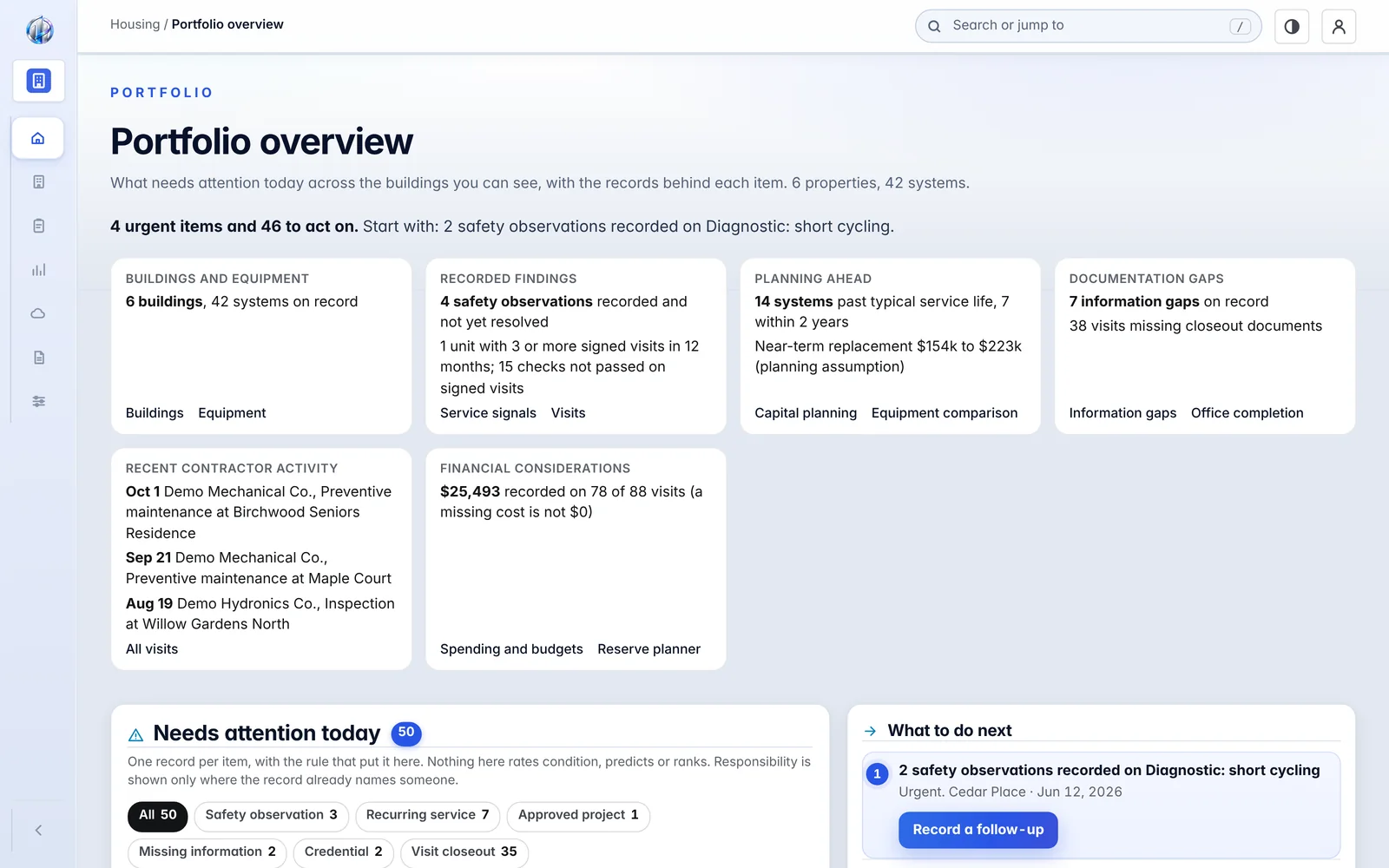
A current Harmelo screen, shown with demonstration data.
Operational intelligence
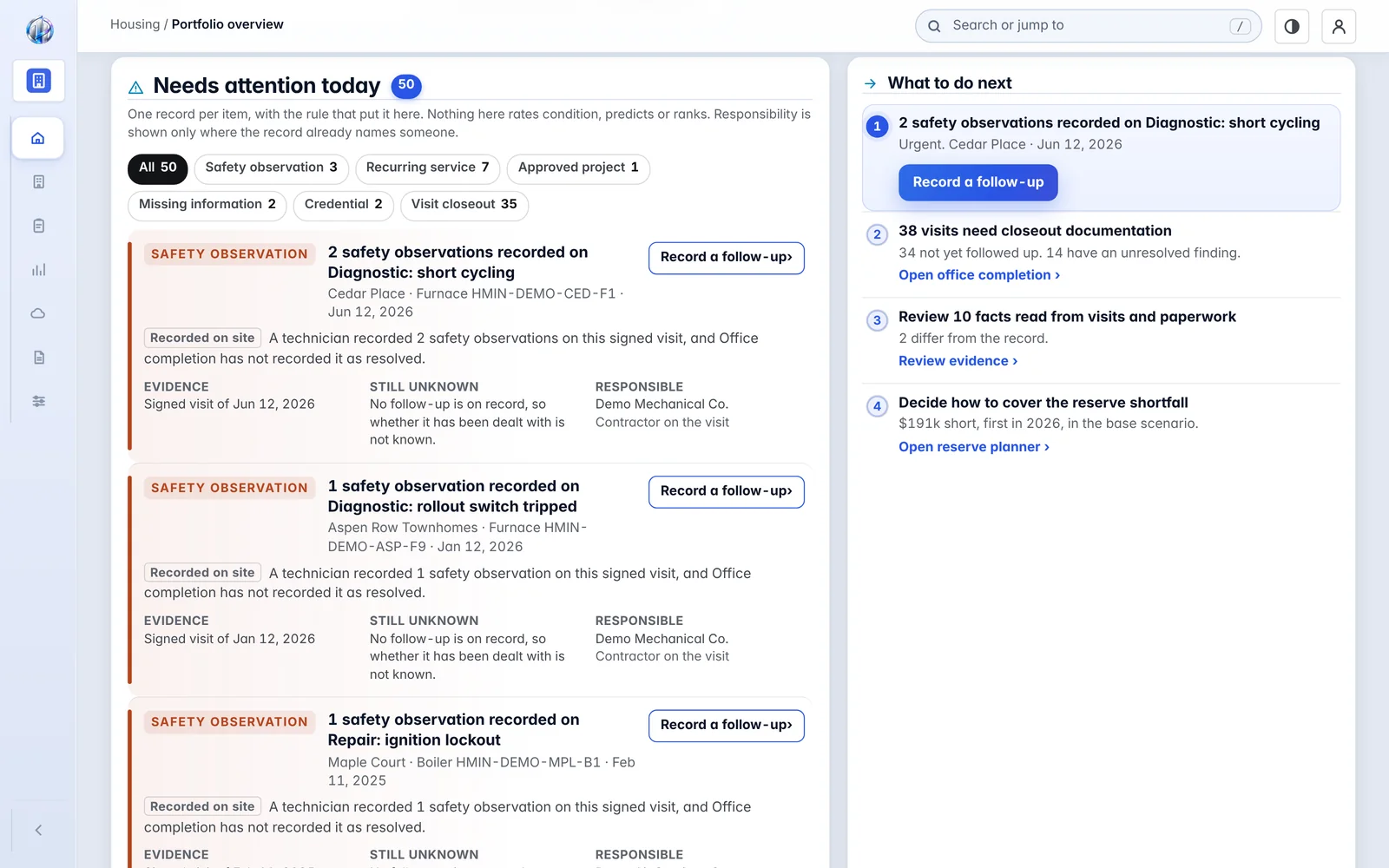
Know what needs attention, and why.
Safety observations, open recommendations, expiring credentials, repeat service and incomplete records, each linked to the visit or document it came from. Observed history only: no forecast and no score.
Service and cost intelligence
Understand what it is costing.
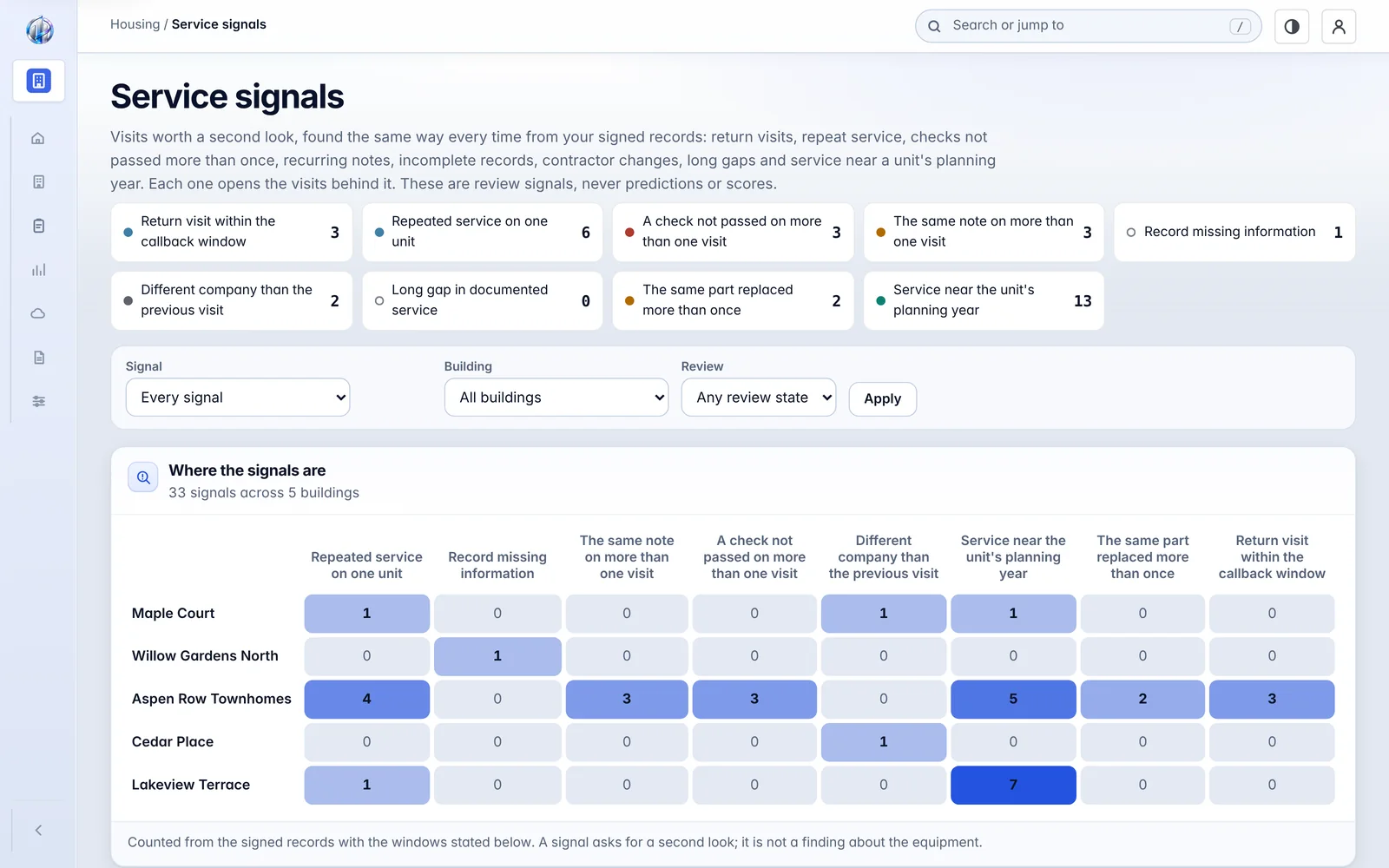
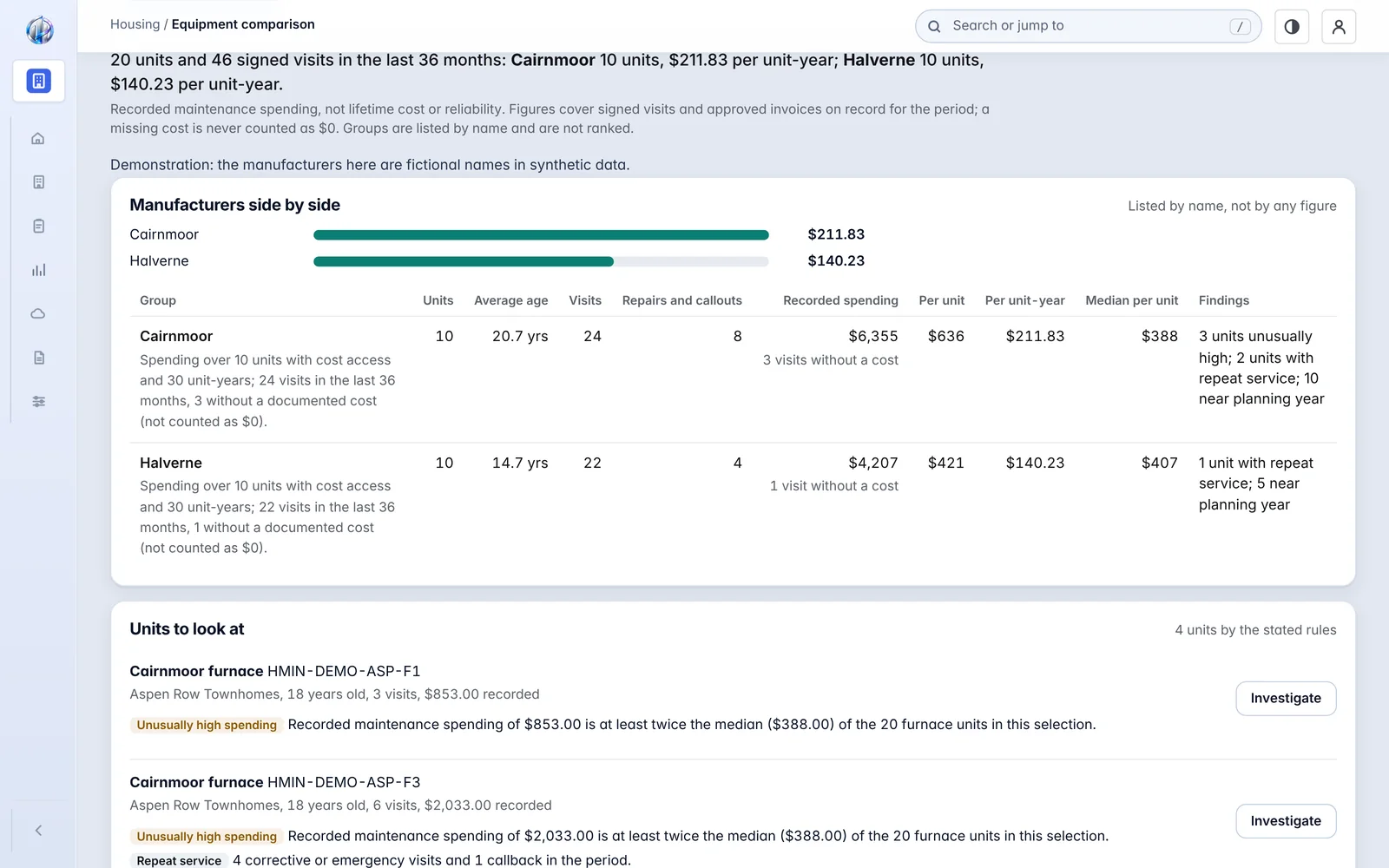
Recorded maintenance spending by manufacturer, equipment type, age or building, with the units, unit-years and visits behind every figure and how many visits carry a documented cost. Units outside the stated rules are listed to look at.
Recorded spending, not lifetime cost or reliability. Groups are listed by name, never ranked, and a missing cost is never counted as zero.
Capital and reserve intelligence
Decide what to repair, replace or fund.
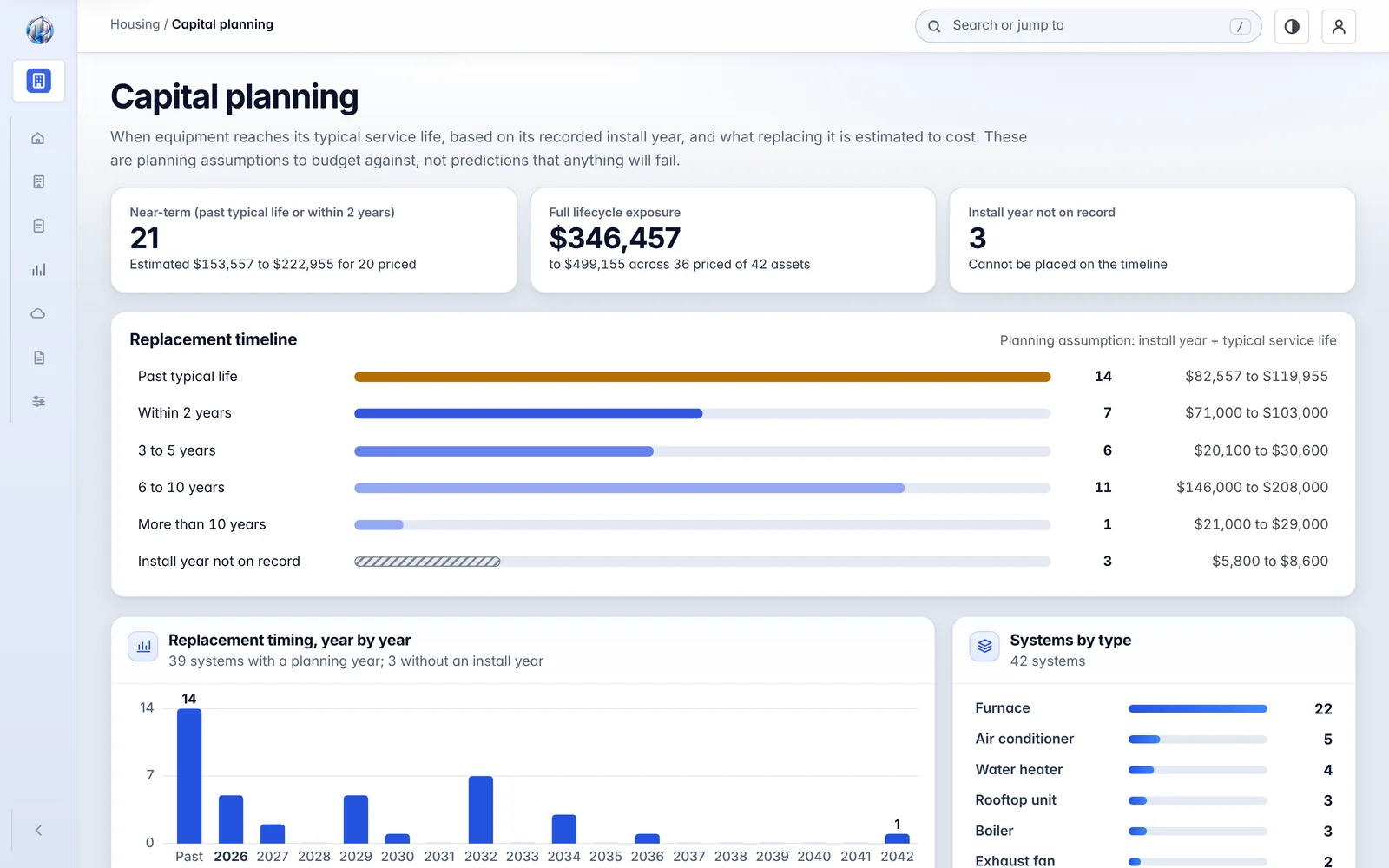
Replacement windows from documented install years and typical service life, cost ranges from documented costs, replacement timing year by year, and lower, base and higher reserve scenarios. Service signals and comparisons show which units to look at first.
Planning assumptions, not predictions that anything will fail. Estimates should be reviewed alongside current inspections, professional advice and the organization's own planning requirements.
From source records to a planning decision
One furnace, start to finish.
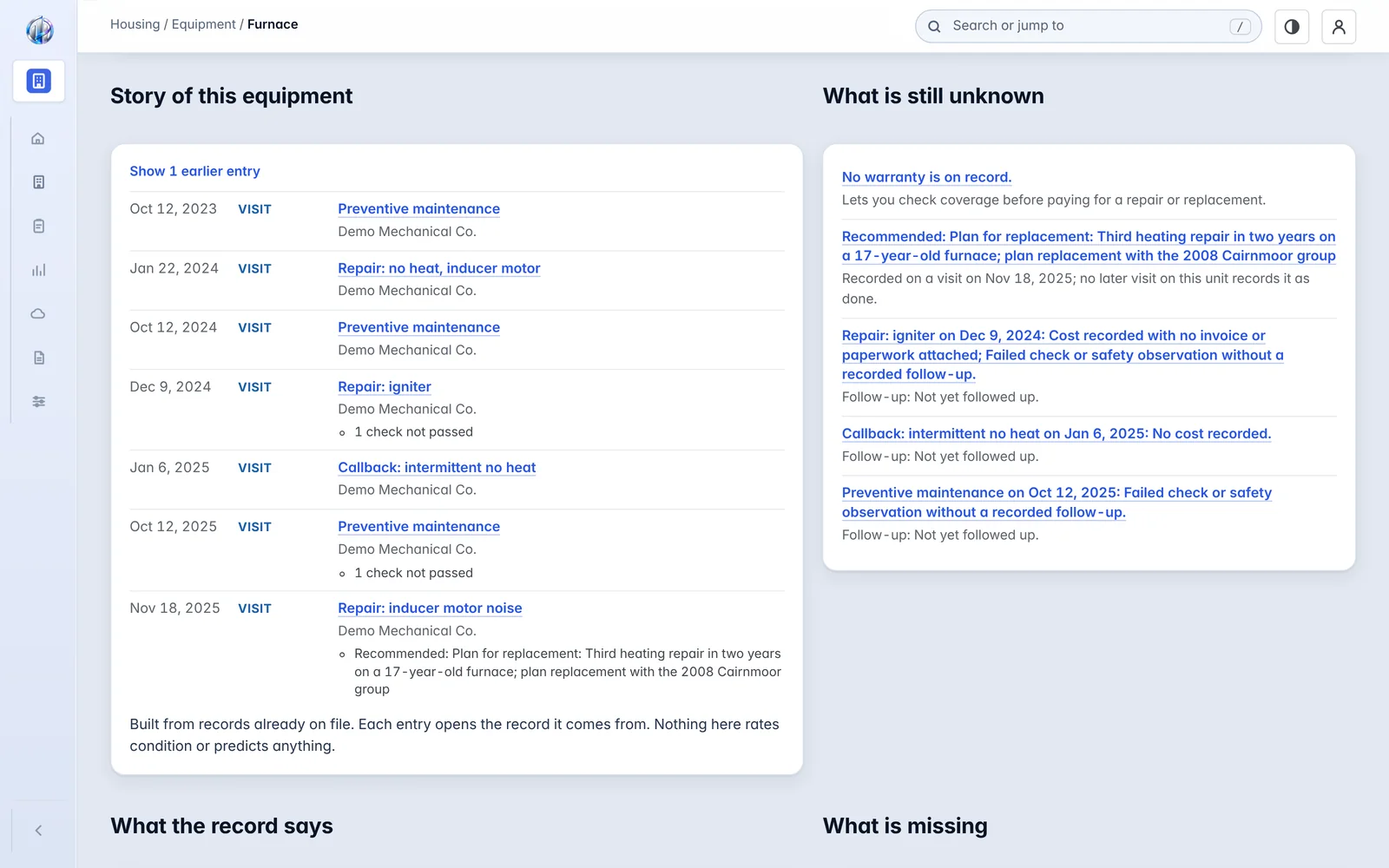
A furnace installed in 2008 in a fictional townhome building, followed through the screens on this page.
- Visits and invoices. Six signed visits in 36 months, each with its recorded cost, one repair with no invoice attached, and the contractor's recommendation to plan replacement. See the record
- The recurring finding. Four repairs and callouts and one callback in 36 months: repeat service by a stated rule, a reason to review the visits together, not a finding about the furnace. See the signals
- Cost against its peers. Recorded spending at least twice the median of the organization's furnaces over 36 months. Recorded spending, not a reliability rating. See the comparison
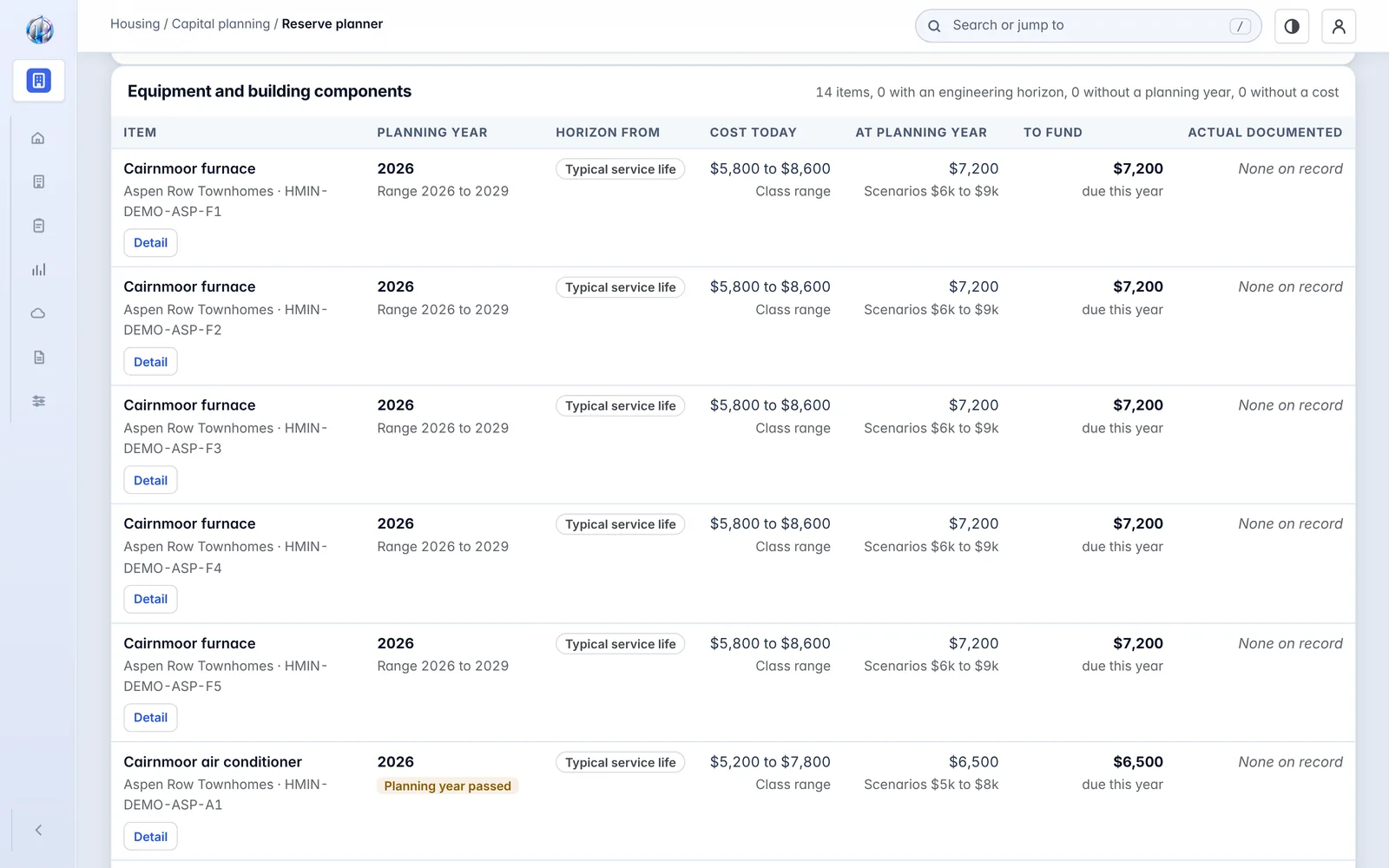
- The plan line. In its building's Reserve planner the furnace carries a planning year from its install year and typical service life, and a replacement cost range labelled as a class range, not a quote. See the plan line
- The capital plan. The building's replacements, year by year, sit inside the portfolio's capital planning, so the furnace is weighed with everything else coming due. See capital planning
Recorded costs and planner estimates are shown separately. Nothing here predicts a failure or ranks equipment. Weather, area context and AI suggestions are not part of it.
Environmental and preparedness context
Be ready when the weather turns.
Weather preparedness is in development. It is designed to keep your preparedness plans and the actions your team takes beside each building’s service history, with recorded area events added as sources are approved. It is not yet switched on in customer accounts, and official alerts and area conditions are not yet connected.
Area context informs decisions. It is not a failure forecast or proof of damage.
Portfolio intelligence
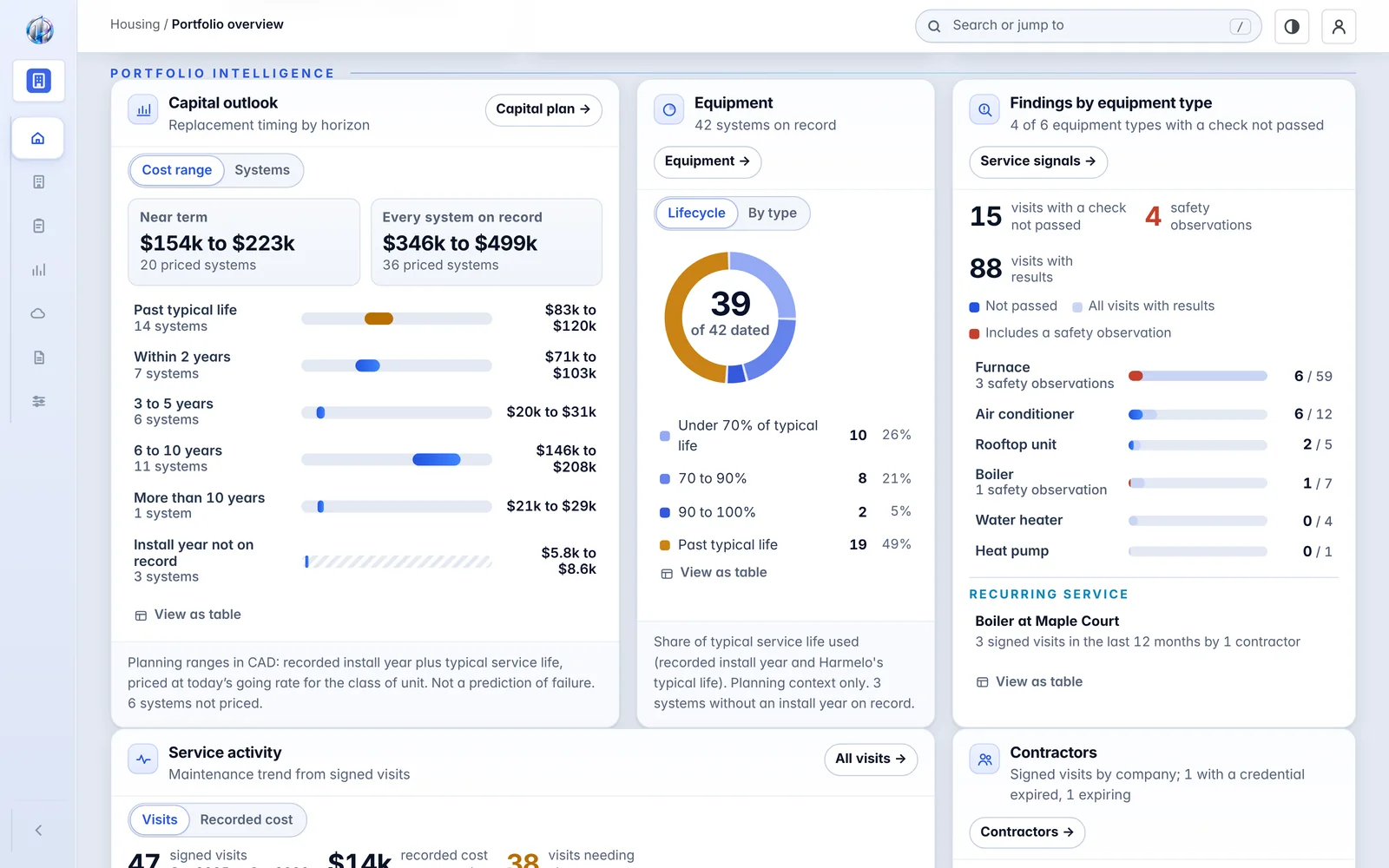
Understand what is changing across the portfolio.
Capital outlook, equipment lifecycle and findings by equipment type, beside information gaps per building. A gap is missing information, not a finding about the building.
Intelligence improves as your record grows.
Start with a Free Core account.
Visits, costs and findings accumulate in your Free Core record at no charge. Paid intelligence is optional, and organizations agree any deployment price in writing before work begins.
How pricing works ↗